Diagnostic Tests
6 articles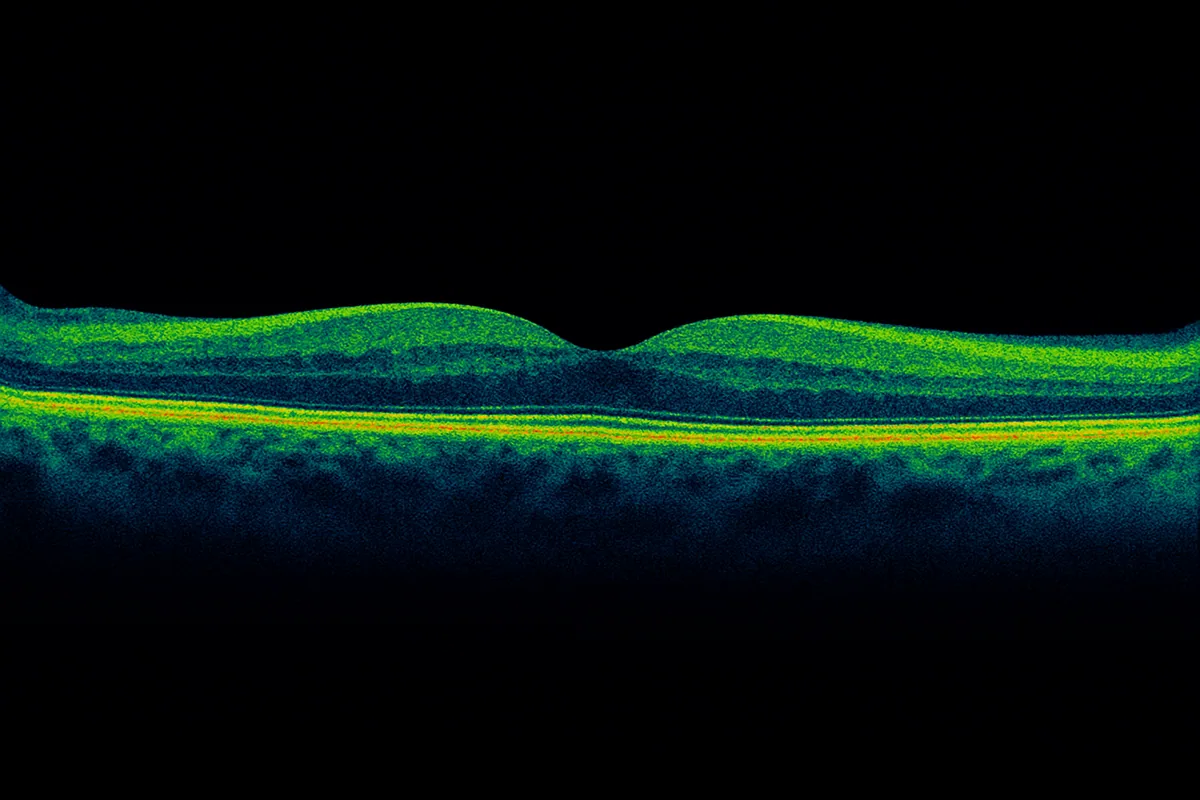
Optical Coherence Tomography
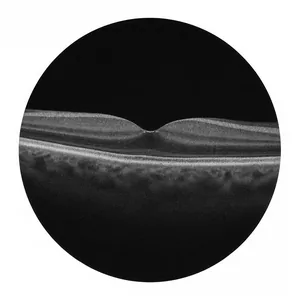
OCT (optical coherence tomography) is a retinal imaging exam that has become essential in ophthalmology. It allows highly precise analysis of the macula – the central area of the retina responsible for fine vision. Julien Gozlan, M.D., ophthalmic surgeon in Paris 16, explains what macular OCT involves, when it is indicated, and how the examination is performed.
Read more

Intravitreal Injections
Intravitreal injections are an essential treatment for many retinal diseases. They allow medication to be delivered directly inside the eye, as close as possible to the macula, in order to preserve vision. Julien Gozlan, M.D., ophthalmologist in Paris 16, explains the indications, procedure, effectiveness, and follow-up for this now routine and painless treatment.
Read more
Fluorescein Angiography
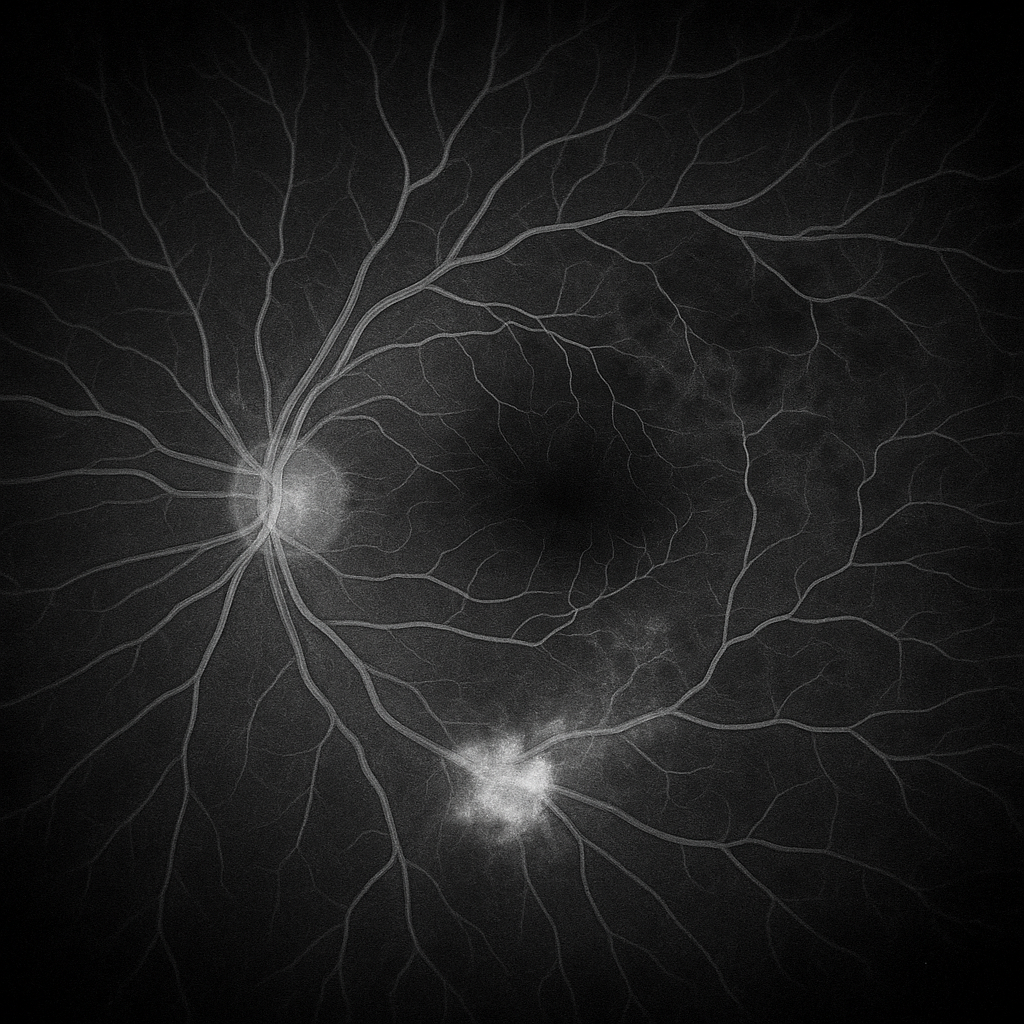
Fluorescein angiography is a retinal imaging examination that allows observation of blood circulation and identification of leaks, hemorrhages, or ischemia. Performed in the office, this examination helps establish a precise diagnosis and guide the treatment of macular conditions such as AMD, or retinal vascular disorders such as CRVO. Julien Gozlan, M.D. explains its principle, indications, procedure, and risks.
Read more
Indocyanine Green Angiography
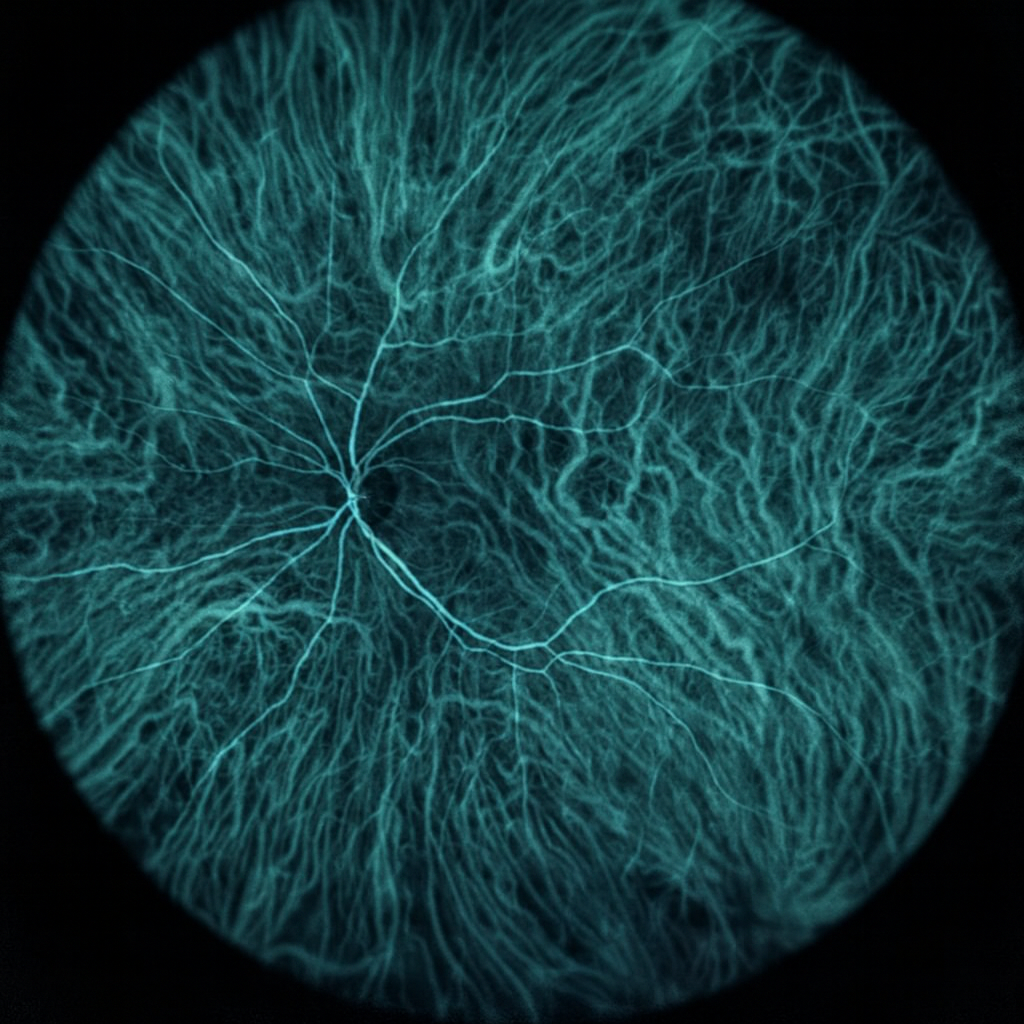
Indocyanine green angiography (ICG) is an imaging examination that highlights the choroidal circulation, located beneath the retina. Complementary to fluorescein angiography and macular OCT, indocyanine green angiography aids in diagnosing choroidal conditions and guides their treatment.
Read more
OCT Angiography
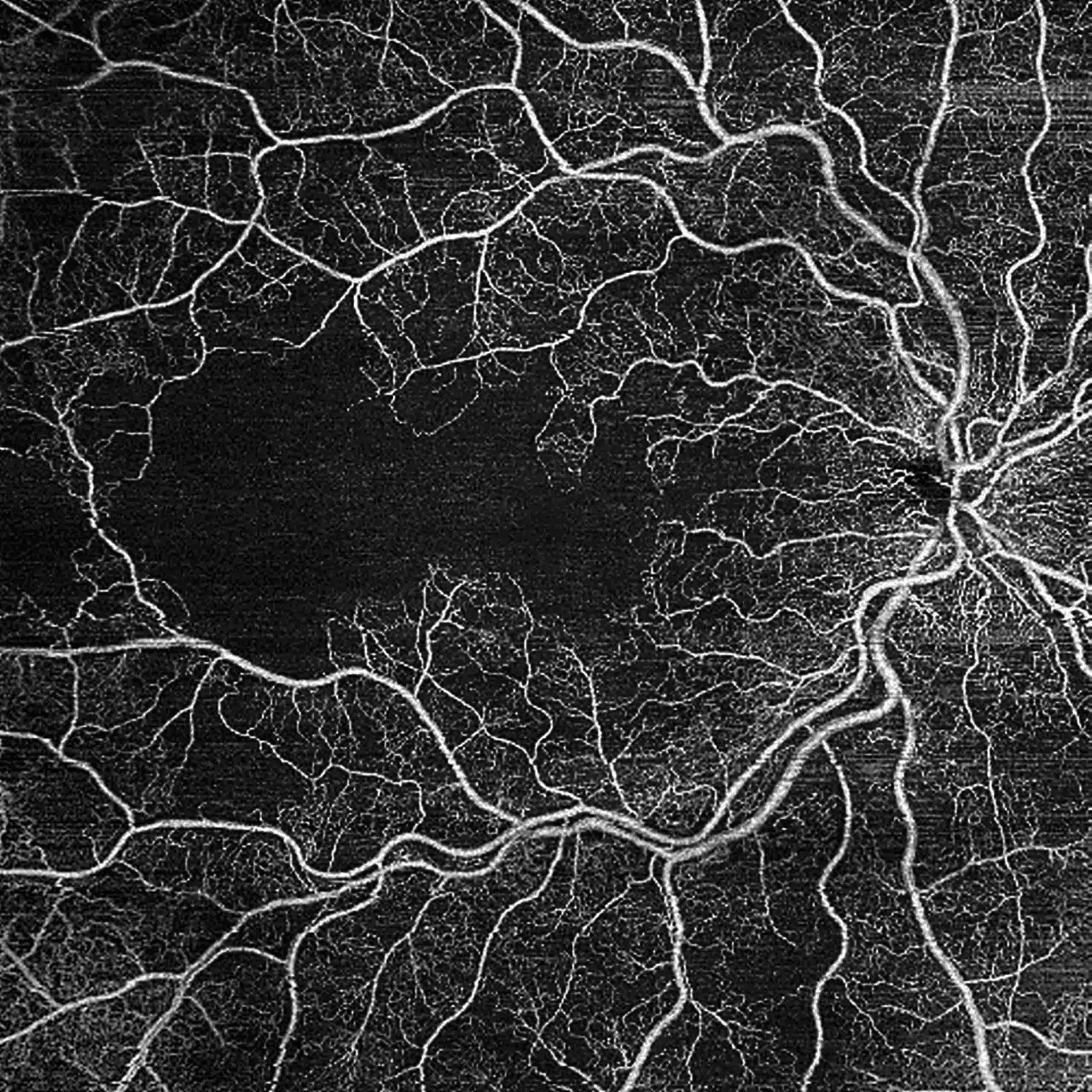
OCT angiography (or OCT-A) is a recent imaging technique that allows visualization of blood circulation in the retina and choroid without dye injection. It complements standard macular OCT and fluorescein angiography. Julien Gozlan, M.D., ophthalmic surgeon in Paris 16, explains the principle, indications, and limitations of OCT angiography.
Read more
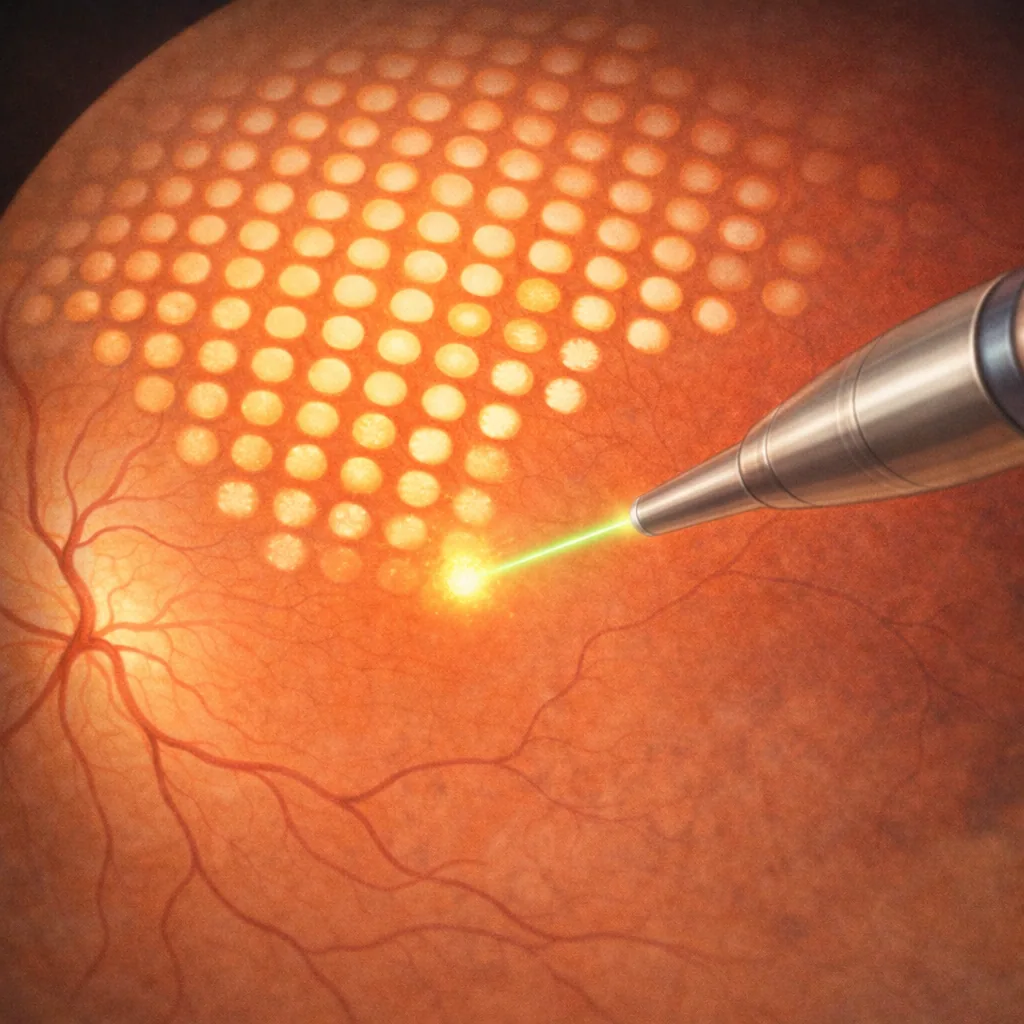
Laser and the retina
Retinal laser (or retinal photocoagulation) is a major treatment in ophthalmology for protecting the retina and preventing certain serious complications, such as retinal detachment or vision loss related to diabetes or retinal vein occlusions. It does not "repair" everything, but it can often stabilize the condition and limit the risk of worsening. Julien Gozlan, M.D., ophthalmologist in Paris 16, explains the indications for this treatment, the practical course of the sessions, the expected outcomes, and the precautions to be aware of.
Read more